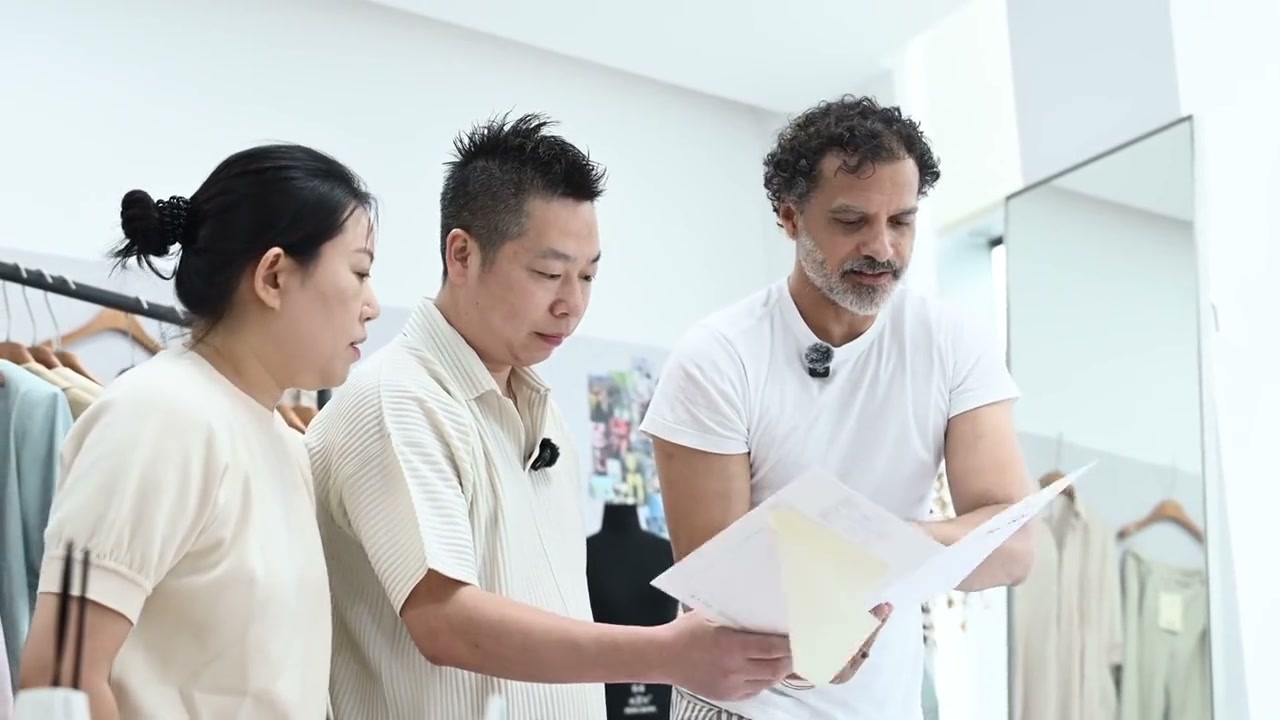
Brief, decision owners and approval gates
We can map required inputs, sample identity, revision control, fit and material questions, evidence requests and release records.

Yoga + sportswear development and manufacturing
A clear development path for yoga, gym and athletic-wear labels that care about fit, fabric and finish.
Start with the blocker
Choose the sentence closest to the current risk. Each route gives a direct answer first, then the evidence and decision sequence behind it.

Product development
A structured route for fit, fabric and construction decisions—built around the buyer's brief, not a fixed template.

Align the product, customer, price position and open questions.
Translate design intent into fabric, pattern and construction direction.
Review fit, measurements, workmanship and buyer comments.
Confirm the approved specification before bulk work begins.
Align inspection scope and shipment records before release.
Inside product development
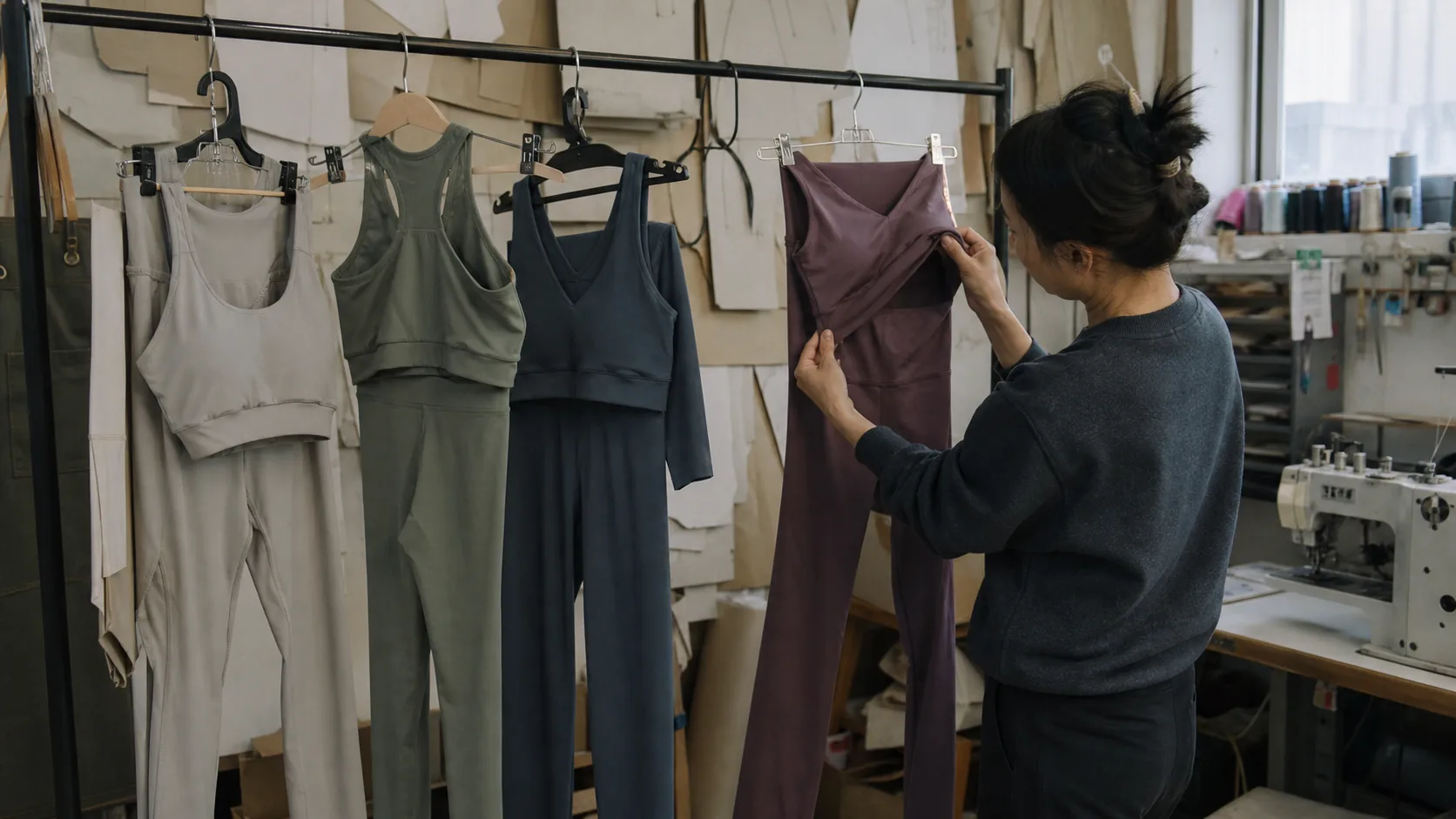
Color, fit, construction and approval records are reviewed as one development system. The aim is not to make another sample—it is to close the question that blocks the next stage.
See the full development serviceServices built around open decisions
A first sketch, a sample to improve or a repeat order: choose the support your product needs next.
Explore all servicesDevelopment footage and editorial illustrations accompany the service routes.
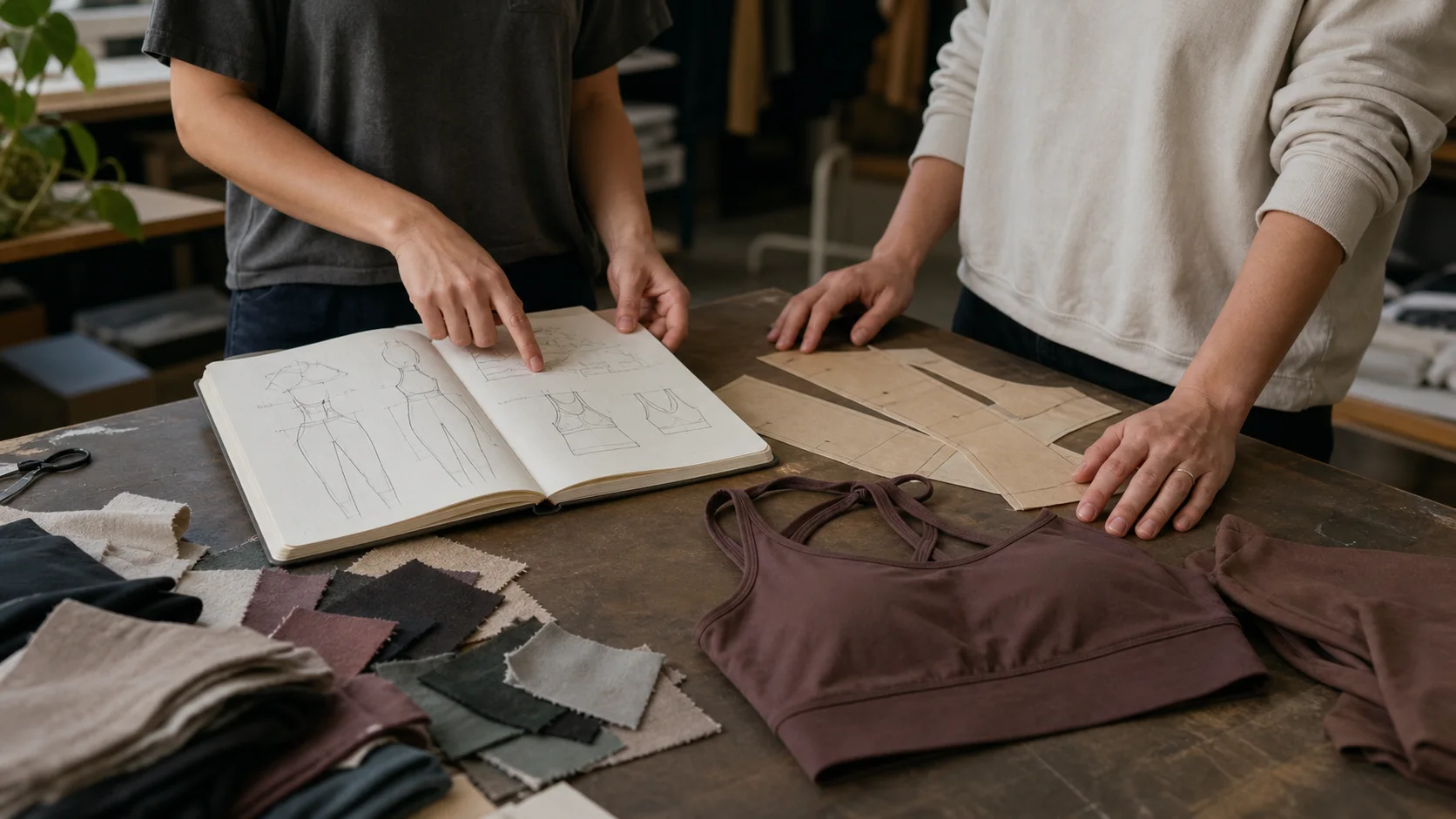
Bring the sketch, reference or partial tech pack. Map what is known and what still needs a decision.
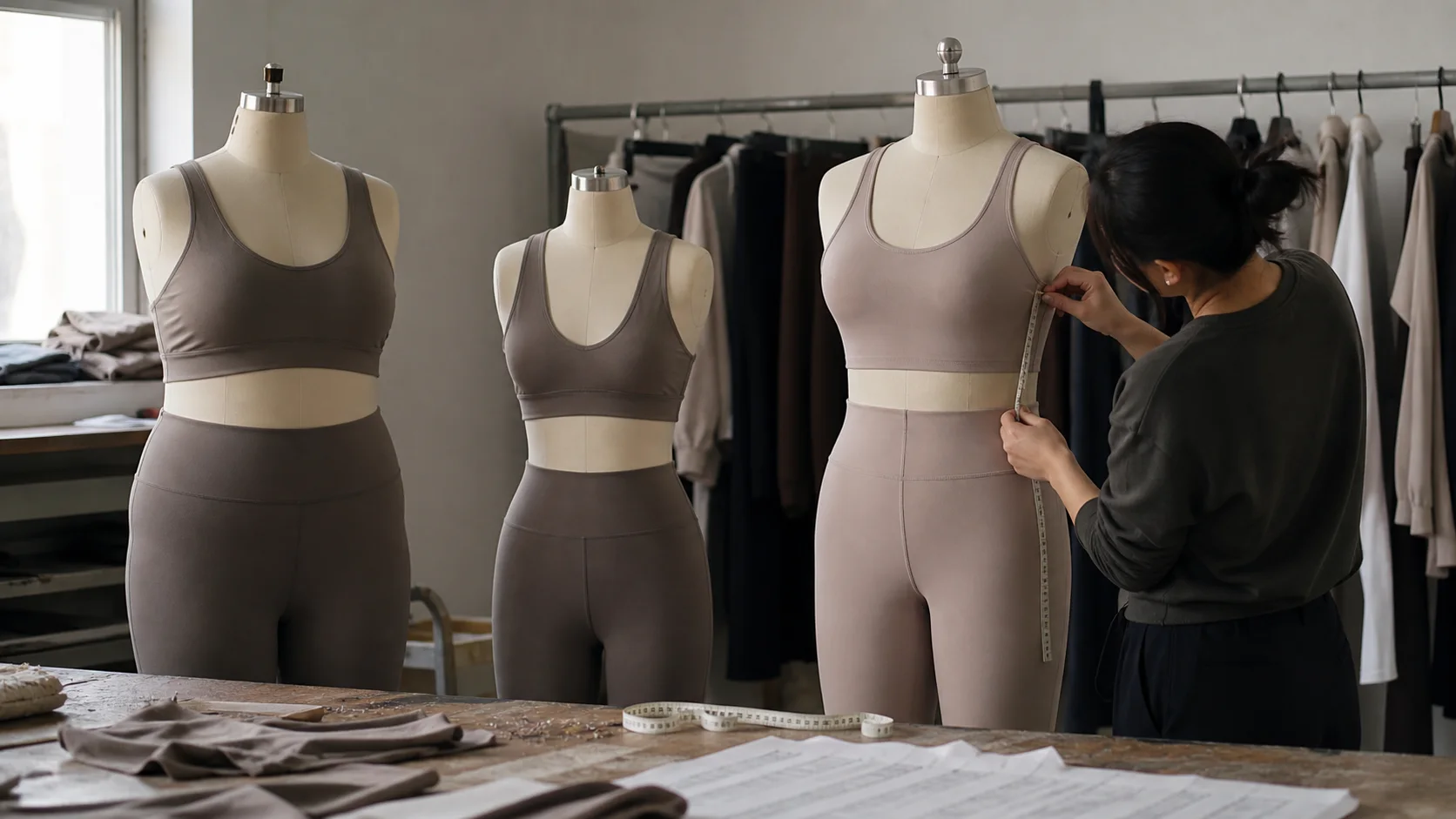
Review waistband, coverage and movement across the sizes that matter.
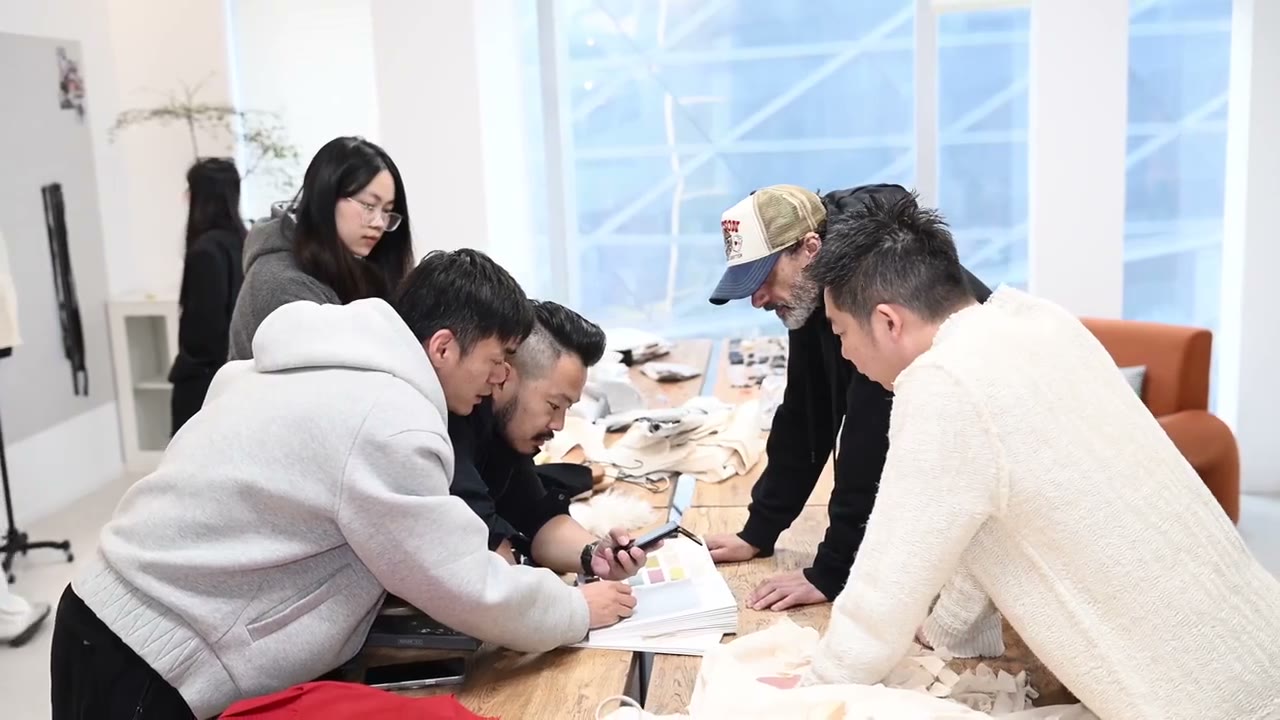
Compare fabric, shade and components in the context of the finished garment.
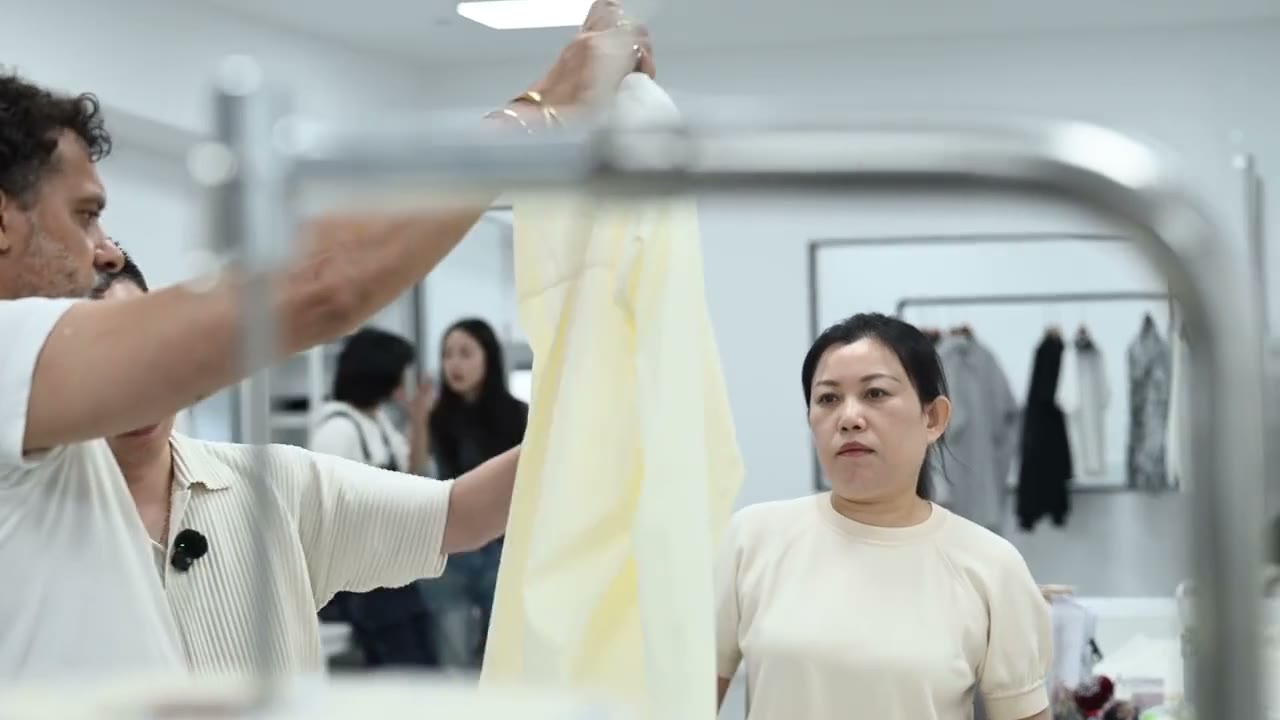
Give each sample a clear purpose, consolidated comments and a recorded approval.
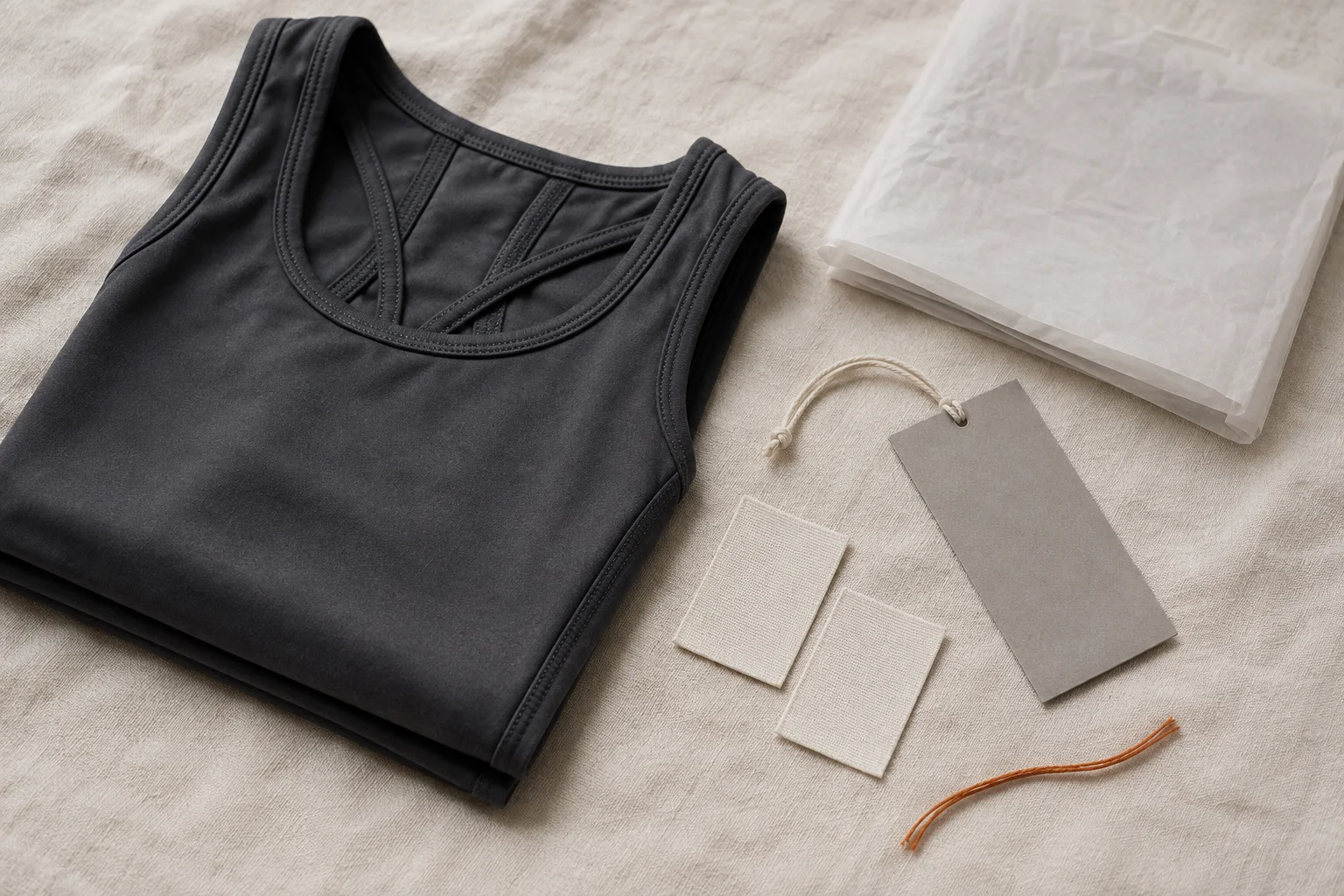
Develop logo placement, labels, hangtags and packaging alongside the garment.
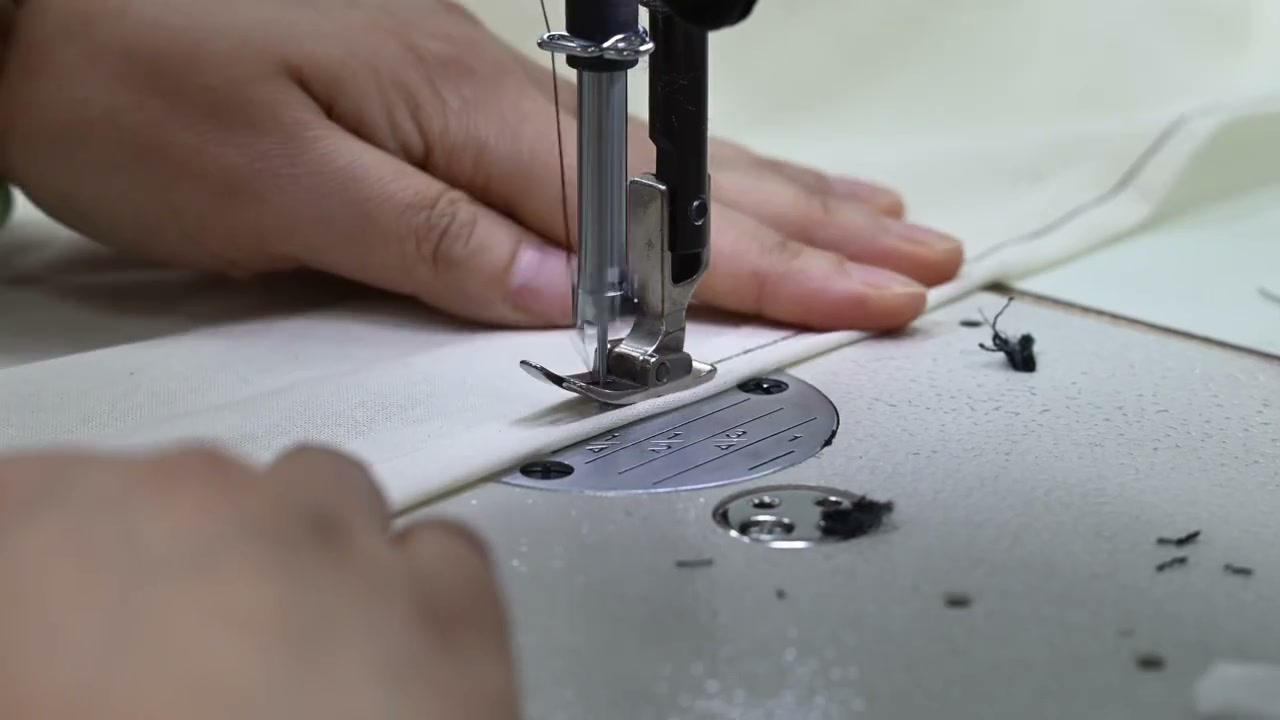
Connect the approved sample with construction checks and the inspection scope.
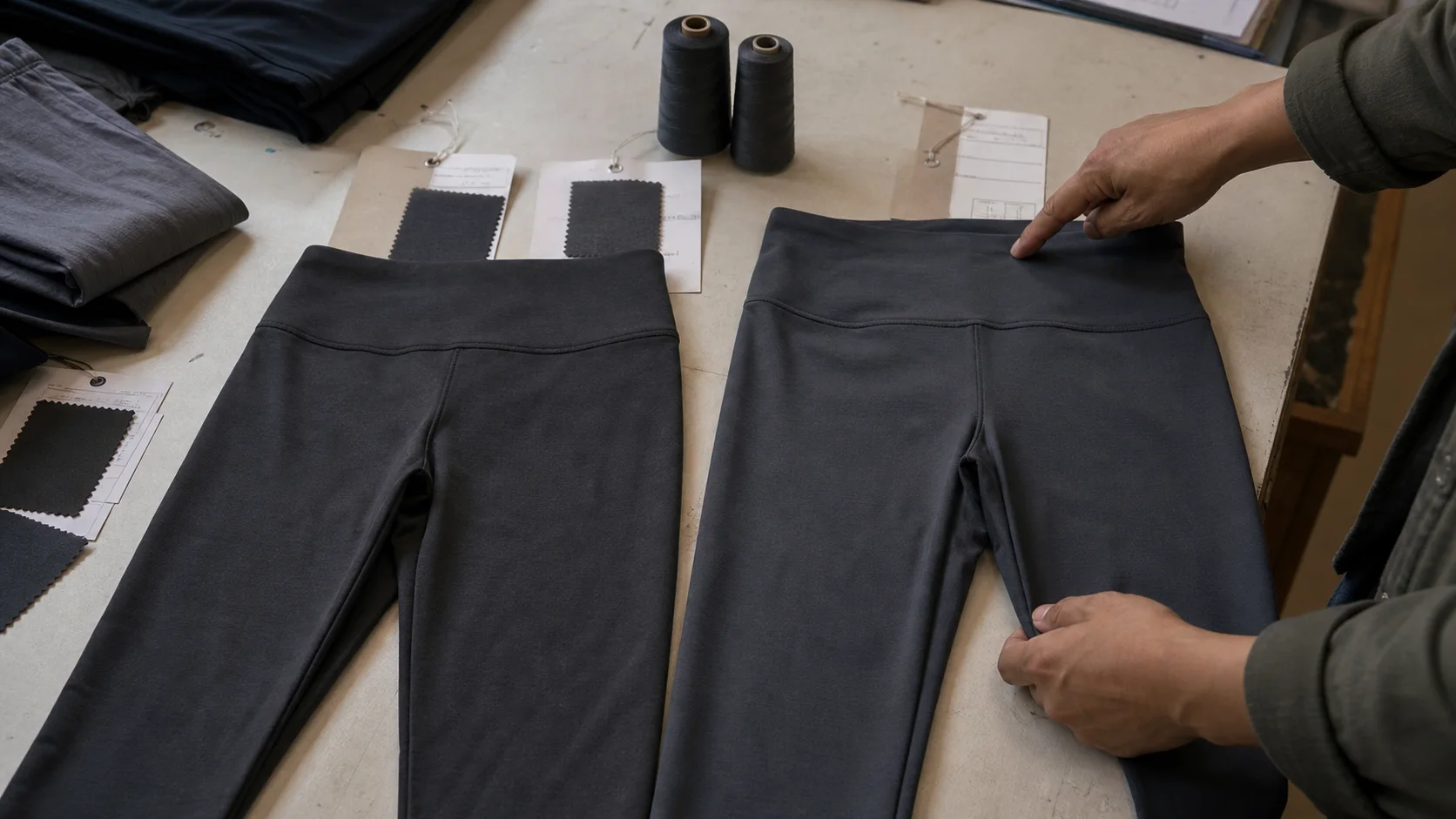
Compare the new lot with the approved reference. Record material, color and trim changes.
Manufacturing and supplier network
Yoga, gym, Pilates, court wear and everyday layers. Choose a product route, then define the factory, private label, OEM or ODM support it needs.
Twenty-nine routes across products, suppliers, factories, private labels, OEM and ODM.
01Stretch material, movement fit, construction and production evidence.
02Training range, private labels, custom logos and supplier responsibility.
03Studio movement, soft-hand fabrics, flare pants and coordinated sets.
04Skorts, dresses, ball storage, court coverage and launch planning.
05Leggings, bras, tops and sets through fit, fabric and approval control.
06T-shirts, hoodies, joggers, casual pants and everyday layers.
07Product starting point, design ownership, branding and production handoff.
08Support architecture, fit, cups, straps, material evidence and release control.
09Opacity, waistband, gusset, recovery, pocket and size-risk decisions.
10Claim boundary, negative ease, construction, wear review and evidence.
11Distance, climate, friction, storage, sweat, color and care requirements.
Different product, different questions. Send the one you're working on
Seamless and brand-supplier research
Brand names identify public supply-chain material only. Nothing here says MOTIONFORM manufactures for these brands, and no page uses their logos, product photography or protected designs.
 01 · Technology / textile illustration
Knitting facility, machine route, yarn, stitch structure, sizing and approval evidence.
Open guide
Read the official supplier list, its coverage and the questions it leaves open.
Read research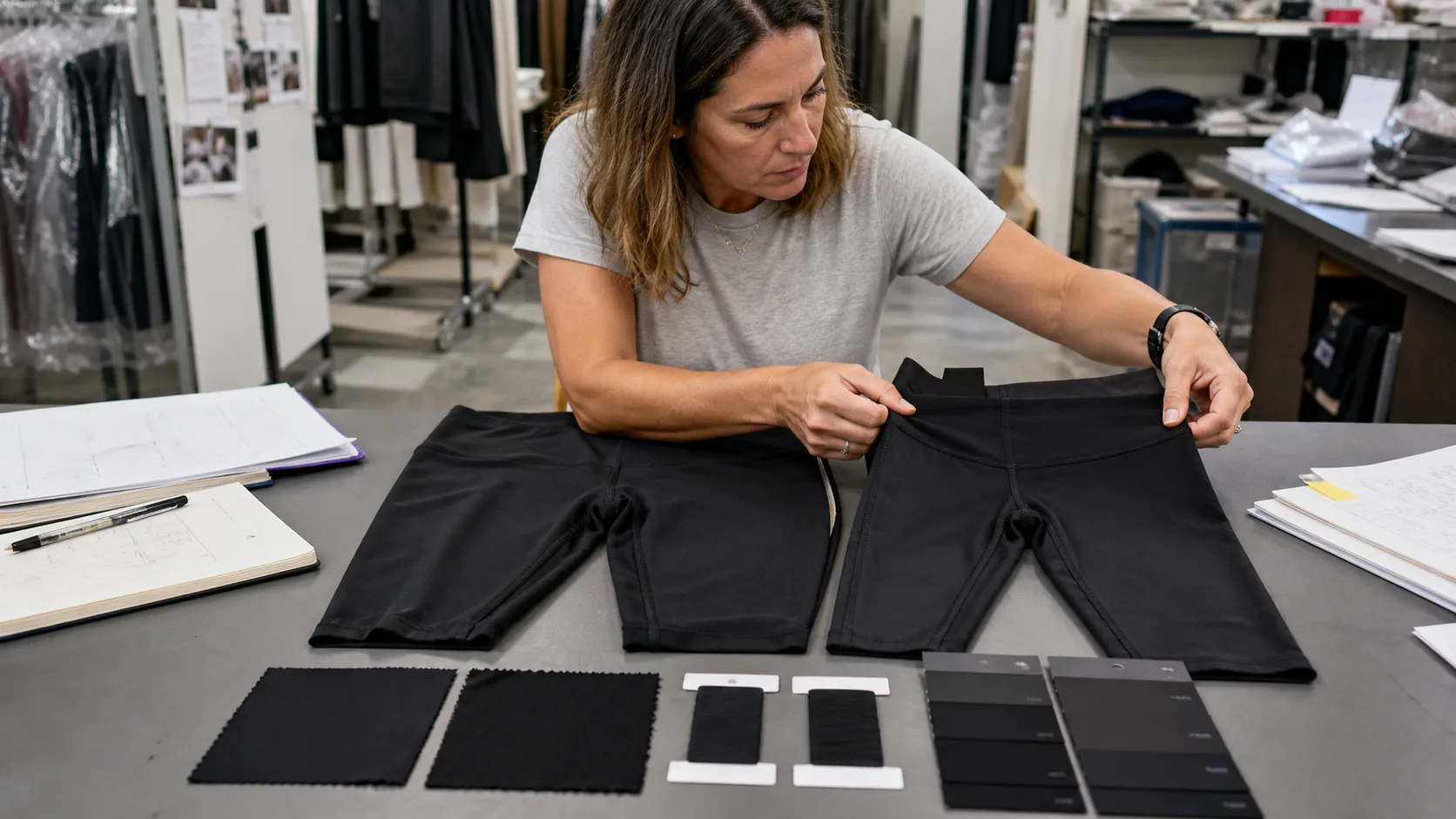
Read the official factory list by tier, facility and production process.
Read research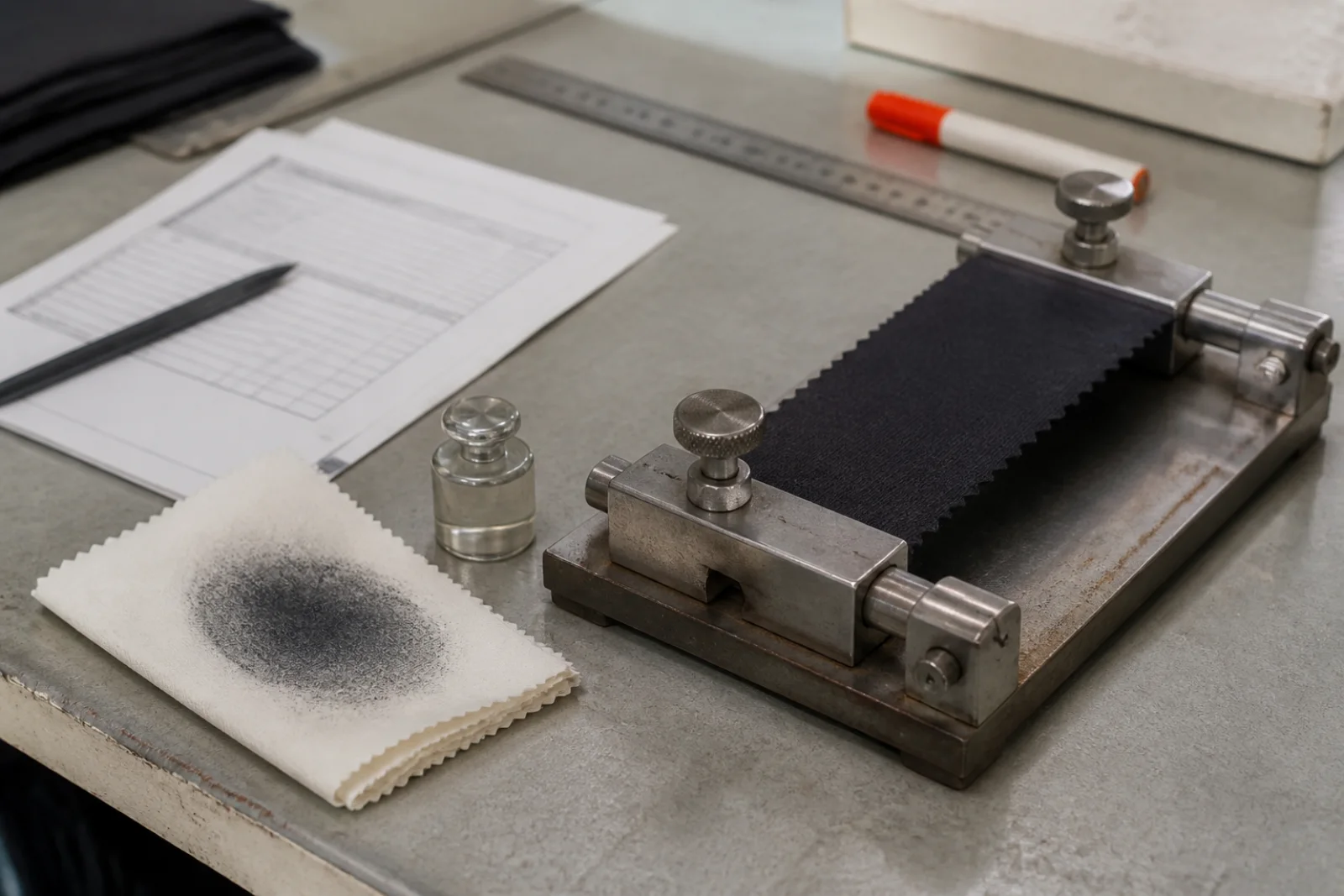
Separate official workplace disclosure from marketplace and trade-data inference.
Read researchResearch illustrations do not depict the named brands’ products, documents or facilities.
Buyer question desk · source-led answers
These questions recur in founder and sourcing discussions. The discussions establish what buyers are struggling with; official and primary sources support the answers.
Open the full decision library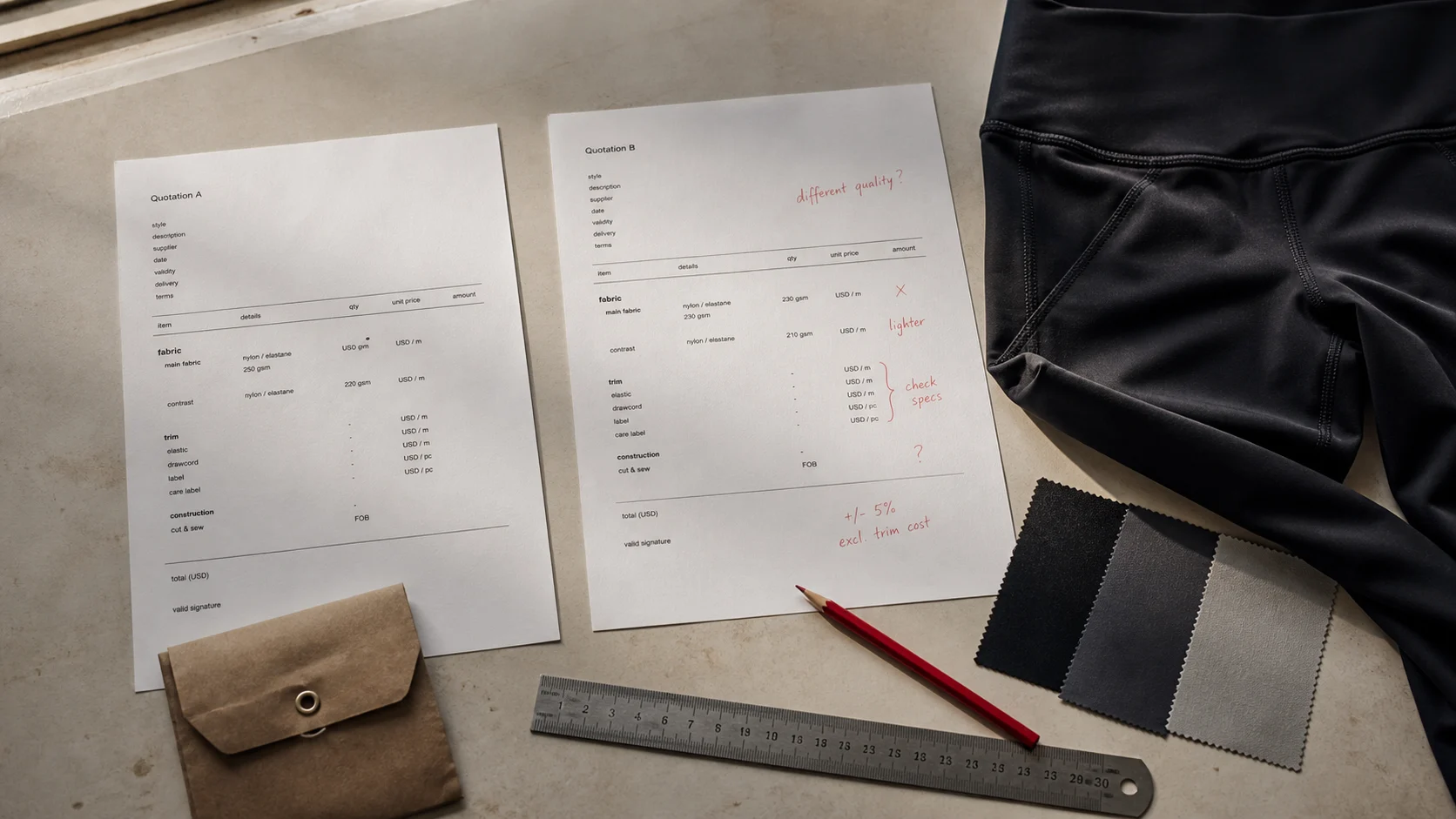
Compare the same specification, quantities, branding and delivery scope. Mark what each quote includes or excludes before comparing the unit price.
Read the full answer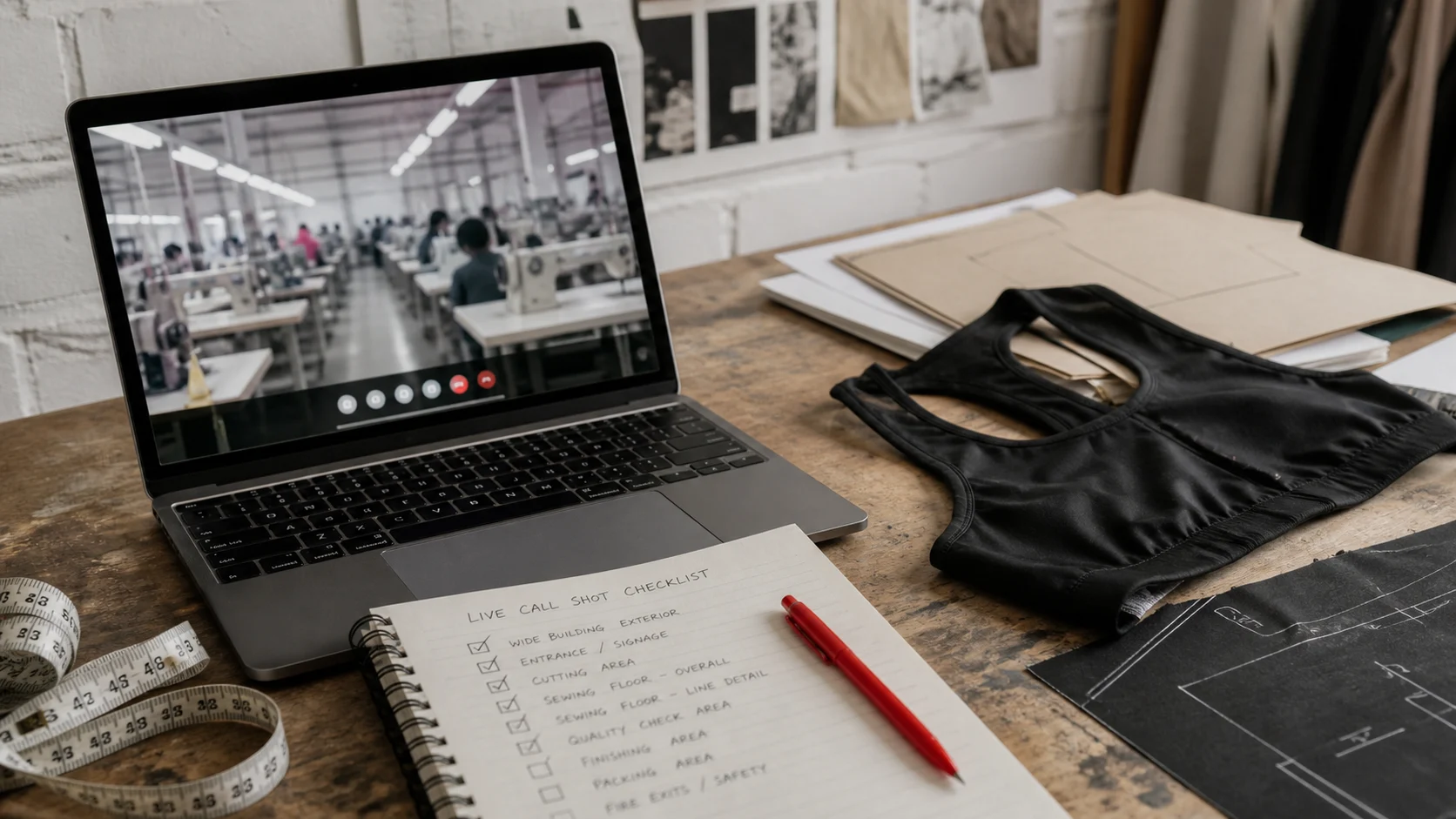
Follow the proposed product through the relevant process and ask to see connected work records. A live tour supports screening; it is not certification.
Read the full answer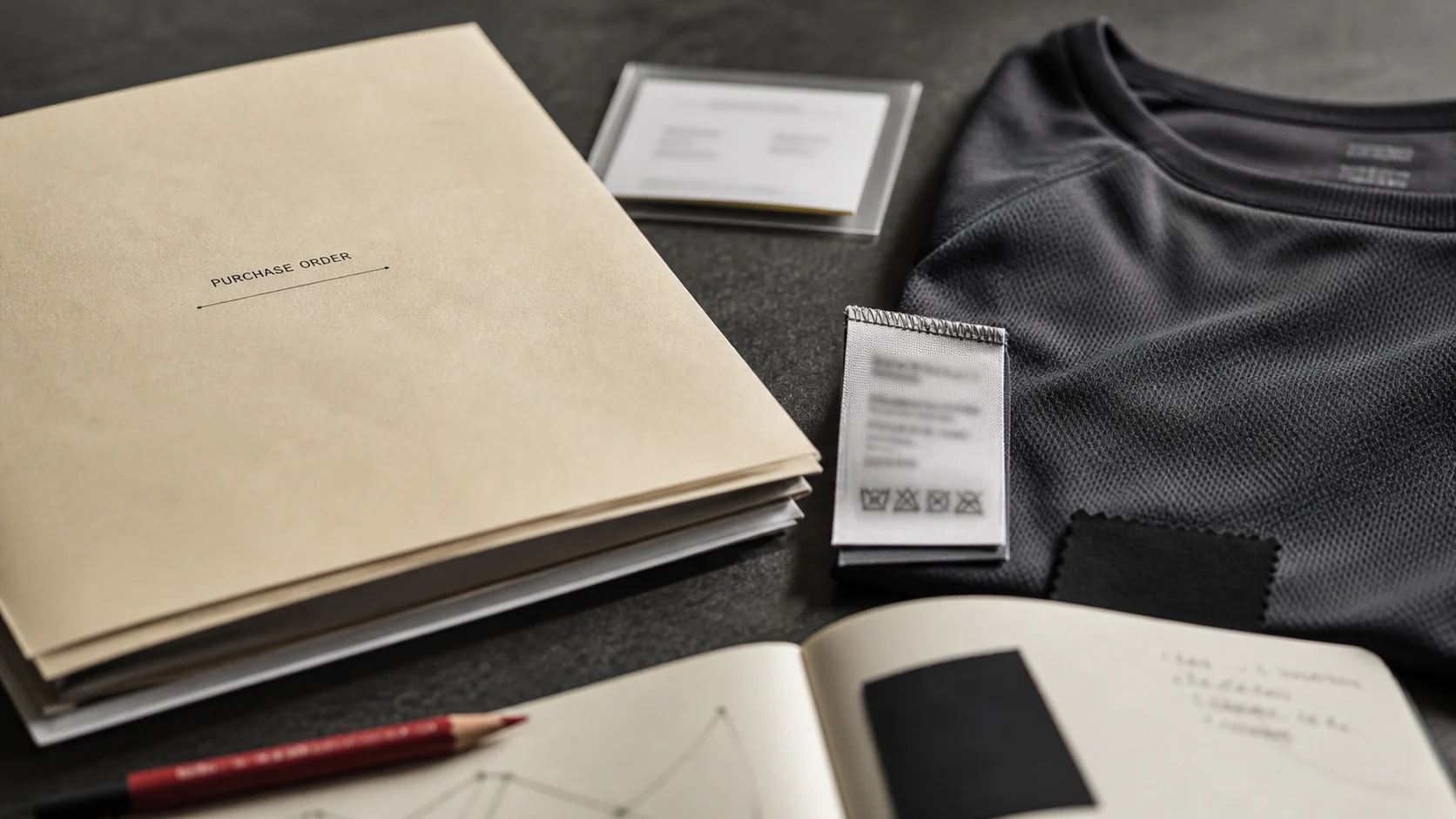
Identify the contracting seller, payment recipient and production facility separately. Record who is responsible for quality and any subcontracted work.
Read the full answer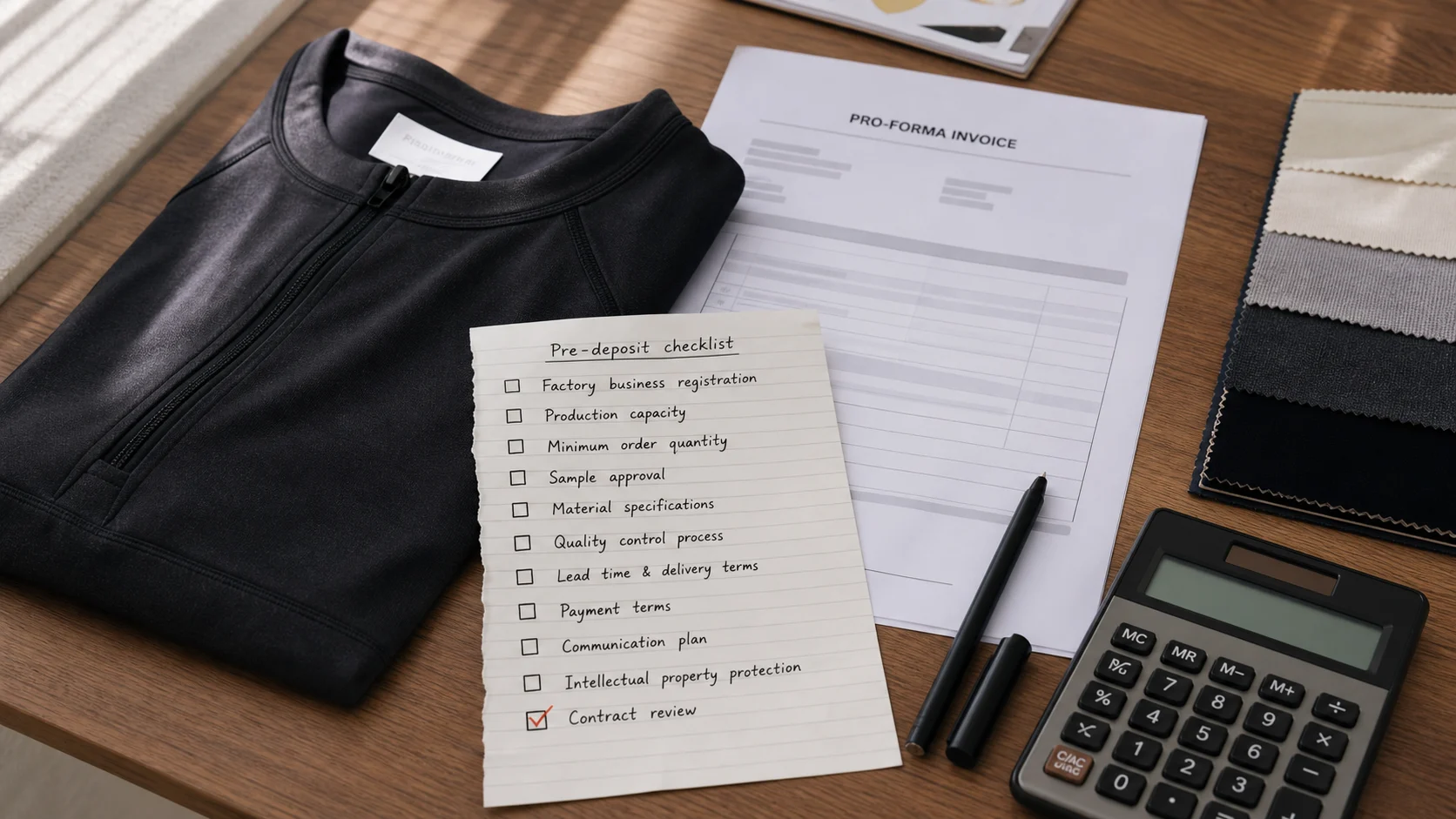
Verify the company and beneficiary, agreed scope, production route and approved product baseline. Resolve unexplained changes before authorizing payment.
Read the full answer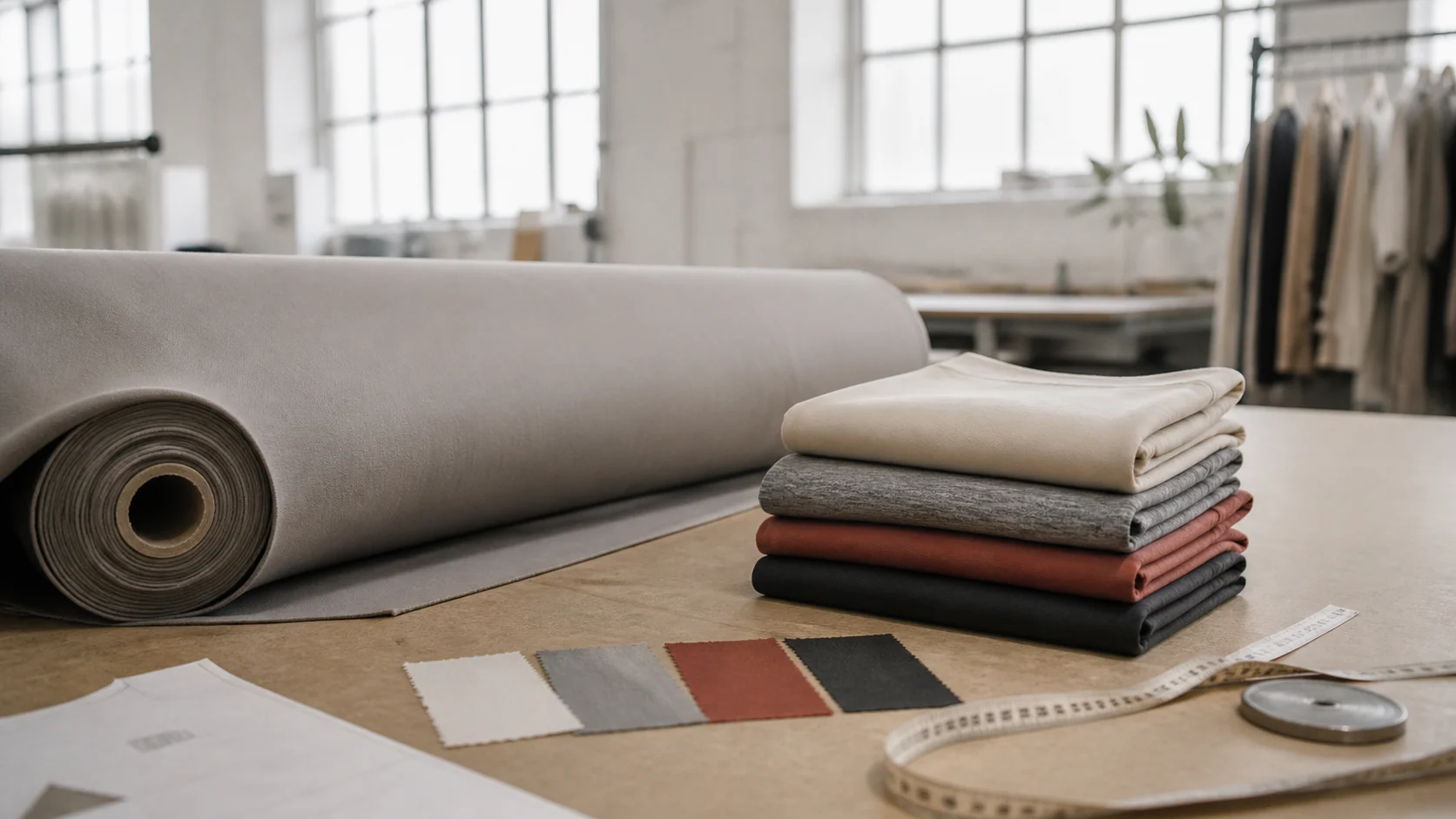
Separate garment, fabric, dye-lot, trim and packaging minimums. Fewer colors or a qualified stocked fabric may open a different production route.
Read the full answer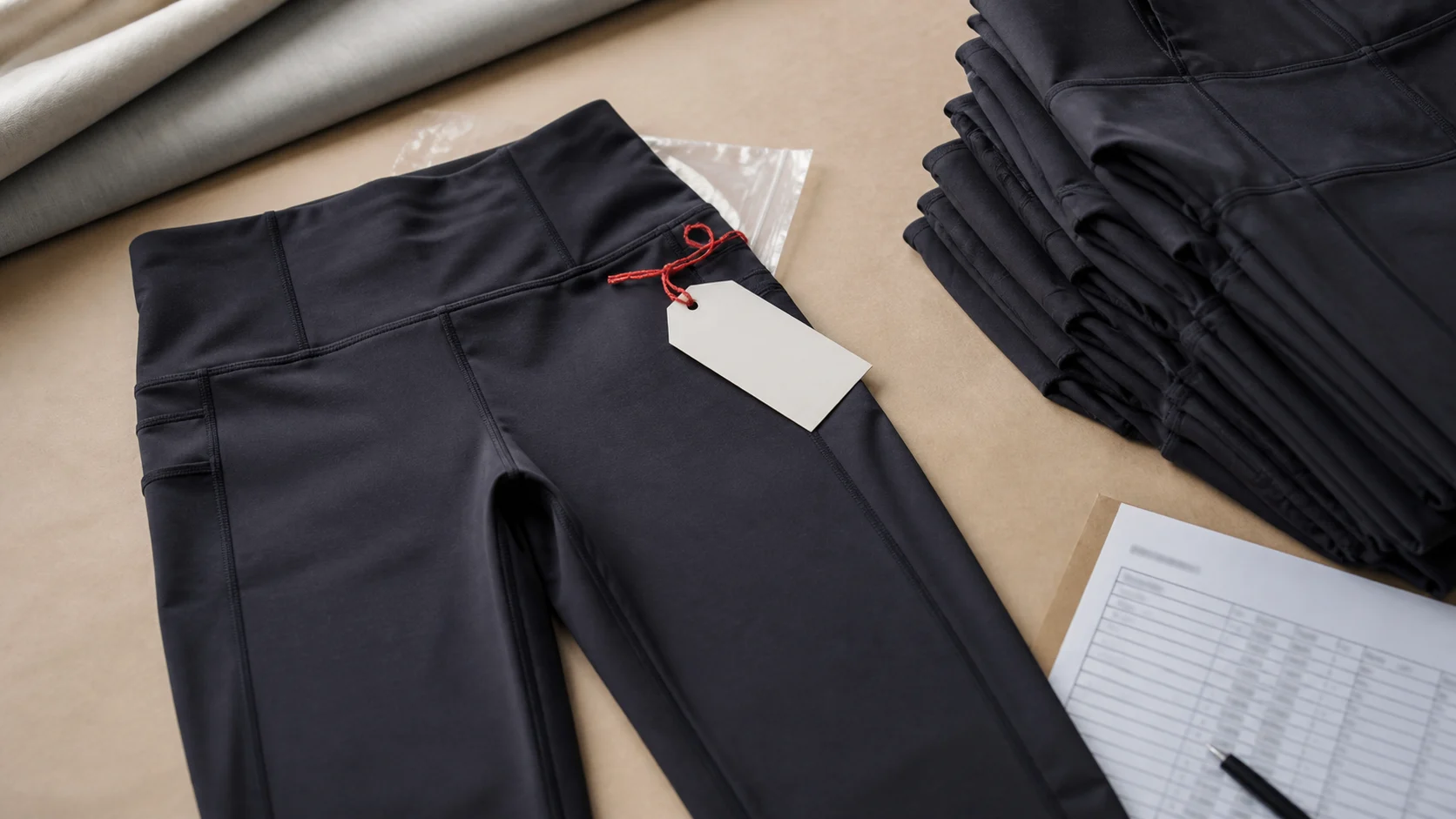
Use one pre-production baseline with current materials, measurements and construction notes. Inspect the actual lot against that same reference.
Read the full answer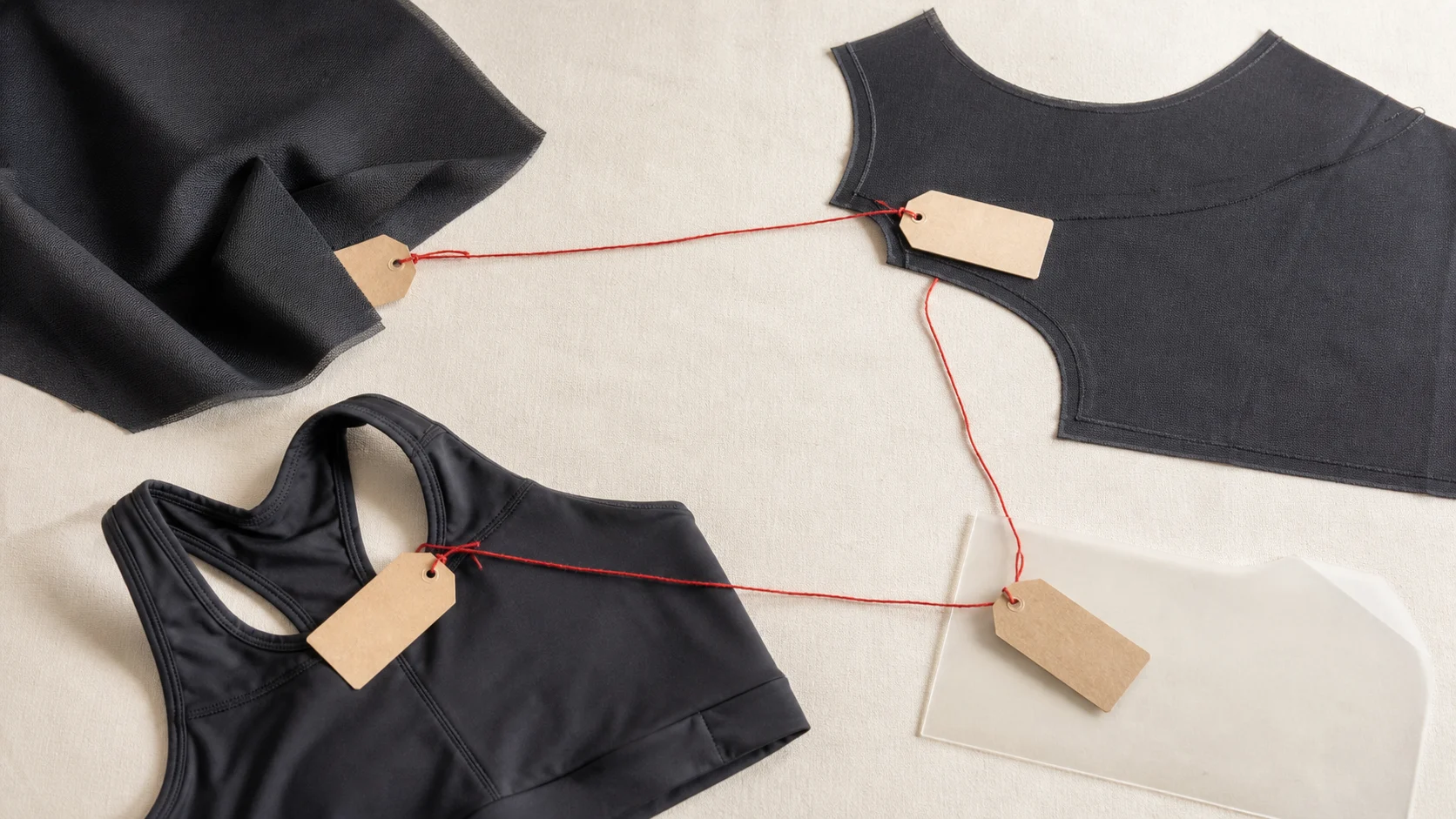
Not necessarily. Agree the approved facilities, process handoffs and change-notice rules. Undisclosed changes are the issue to control.
Read the full answer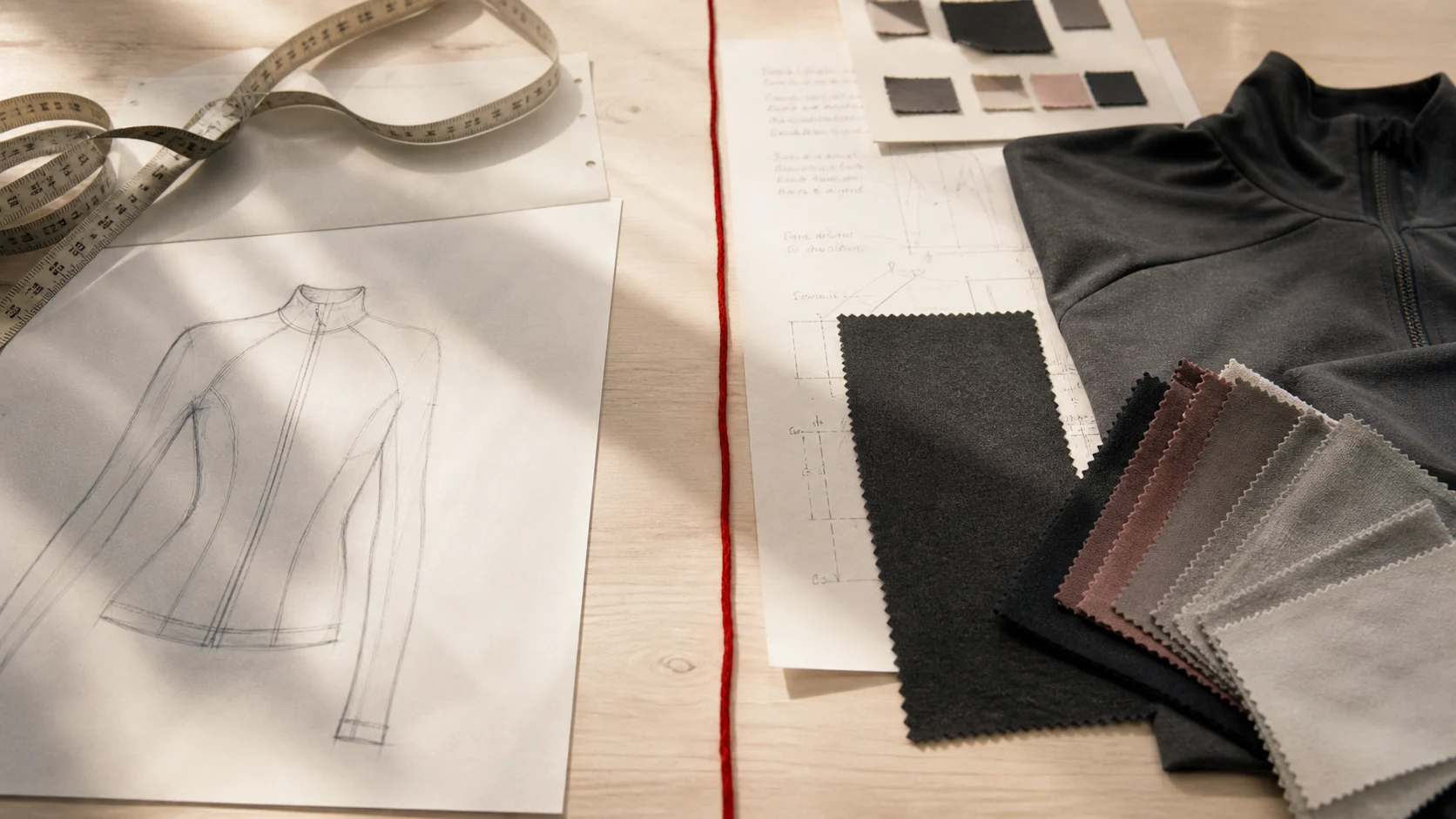
Name who supplies, approves, pays for and owns patterns, artwork, knitting programs and development files. Do not leave ownership to a label.
Read the full answerMaterial engineering
Stretch, recovery, opacity, surface, shade and construction route need to be discussed against the actual garment. Upstream footage is presented as material supply-chain context unless the responsible facility is verified for the project.
Open the fabric selection guideA brief is easier to answer than a guess. Start a project
Case lab · illustrative scenarios
Before a commitment
Separate the development plan from the details that need confirmation for your order.
Build your evidence checklist
We can map required inputs, sample identity, revision control, fit and material questions, evidence requests and release records.
These depend on the actual style, material, color count, quantity, facility, destination and current production plan.
Every claim needs a matching holder, product or material, scope and date. A familiar description is not proof of an unchanged baseline.
Factory evidence
Ask for the records behind each approved style. We organize the development questions around material direction, fit comments, production checks and the agreed inspection scope.
See the factory evidence route Explore the evidence center Watch the process library with transcriptsBuyer-approved fabric direction and submitted test records.
Comments, measurements and sample changes documented.
Construction points checked during production.
Final inspection scope aligned before shipment.
Buyer tools
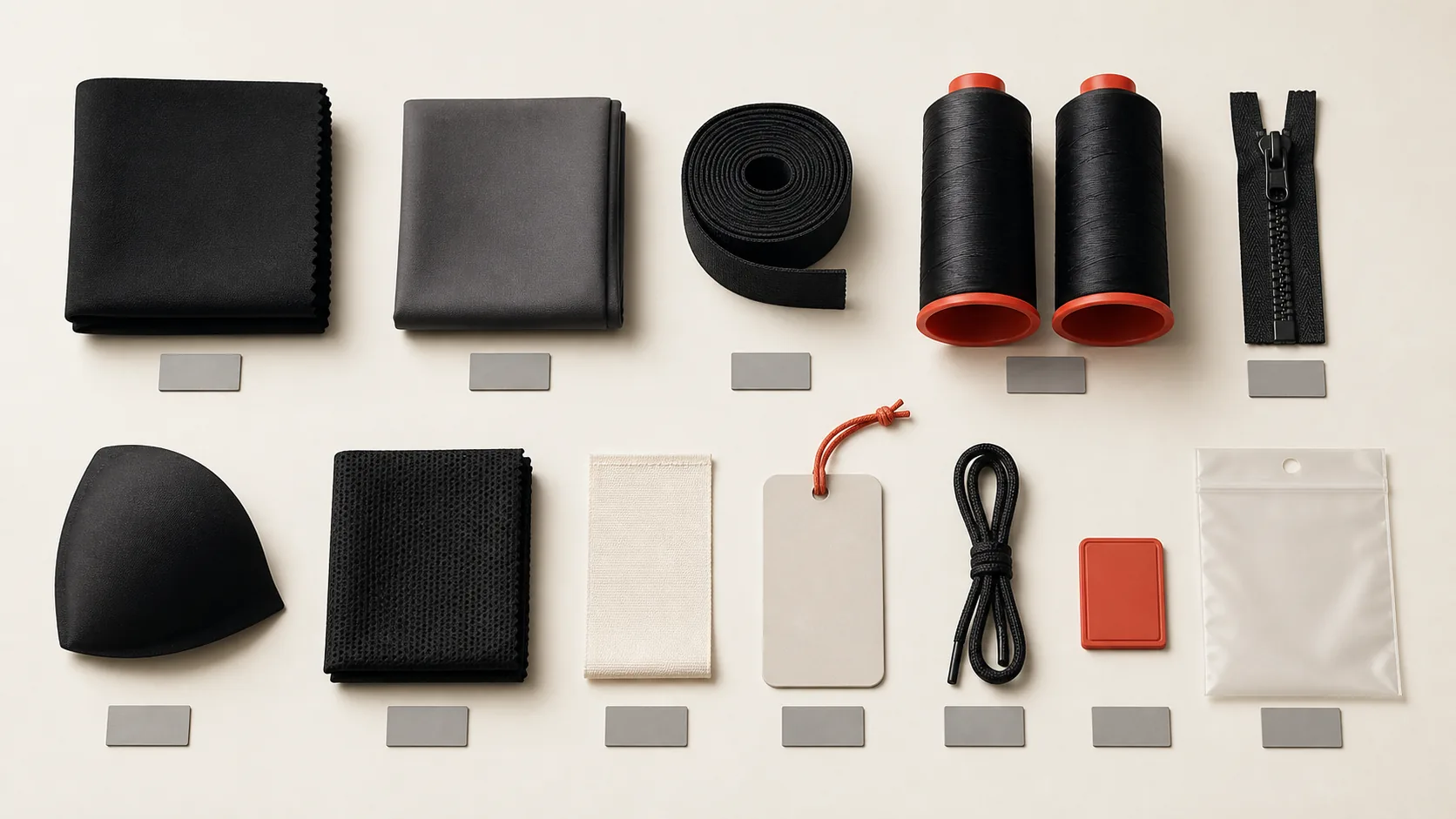
Use a practical pre-sampling list to surface missing measurements, materials, trims and test needs.
Open guide 02Translate hand feel and visual preferences into reviewable performance and testing questions.
Open guide 03See which development, material and inspection records can be aligned before an order.
Open map 04Use 24 buyer-side definitions for sampling, seamless, fabrics, quality and approval decisions.
Open glossary 05Watch development and material-process clips with time-coded visual transcripts and clear evidence limits.
Watch records 06See how sources, supplier claims, comparisons, update dates and corrections are handled.
Read methodFewer assumptions start earlier. Send the brief
Sourcing intelligence
Source-linked answers built to make product, factory and OEM/ODM decisions more specific.
Buyer FAQ
Include style drawings, measurement points, size range, construction notes, fabric direction, color references, trims, branding placement, packaging needs and the target market. Mark open items so they are treated as development questions, not assumptions.
A reference sample can communicate fit, hand feel or construction intent. Original brand elements should not be copied; identify the functions to study and the details that need a new solution.
Connect hand feel and appearance with measurable requirements such as stretch direction, recovery, opacity, weight, color performance and any testing requested for the target market.
Align the approved sample, measurements, bill of materials, colors, trims, labels, packaging, quantity breakdown, inspection scope and any required test records before bulk begins.
Verify the contracting and production entities, facility relationship, processes used for the proposed style, development ownership, applicable evidence, quality responsibilities, subcontracting policy and production-release records.
Put every quotation on the same style revision, material, color and size breakdown, branding, packaging, sample path, testing, inspection and delivery basis. Mark every line as included, excluded, provisional or not stated before comparing unit prices.
Verify the contracting entity and payment beneficiary, final commercial scope, production route, approved product baseline, deposit trigger, intellectual-property terms, inspection responsibility and every unresolved exception.
Not necessarily. Identify the contracting seller, payment recipient, exporter, origin-conferring garment facility and specialist processors separately, then record who controls quality and change approval.
No. Specialist processors can be a legitimate part of apparel production. The risk is undisclosed or uncontrolled subcontracting, so define the approved route, notice threshold, qualification evidence and seller accountability.
Map who supplies the concept, pattern, grading, fabric and trim specification, artwork, samples, testing, production release and change approval, then state ownership and permitted use of each resulting file or tool.
Start a project
Tell us the product, target market and development stage. The project brief will surface the questions needed to scope the next step.
Privacy note: your brief is sent to the configured inquiry endpoint only after you submit the form.